Quick-turn feasibility studiesto understand the design requirements and facility impacts.
For product development, attractions and theatrical systems. We work out what the design has to do, what the building has to give it, and what it takes to build, before you commit the budget.
Feasibility studiesfor owners and theme parks.
Know what your idea will ask of the design and the building before you commit the budget, so the budget and schedule match the real work.
Feasibility studiesfor product development and theatrical systems.
A new mechanism, show effect or theatrical system, proven on paper first: how it works, what it needs from the building, and where the engineering risk is.
What a technicalfeasibility study covers.
A technical feasibility study is the spark of design. It includes:
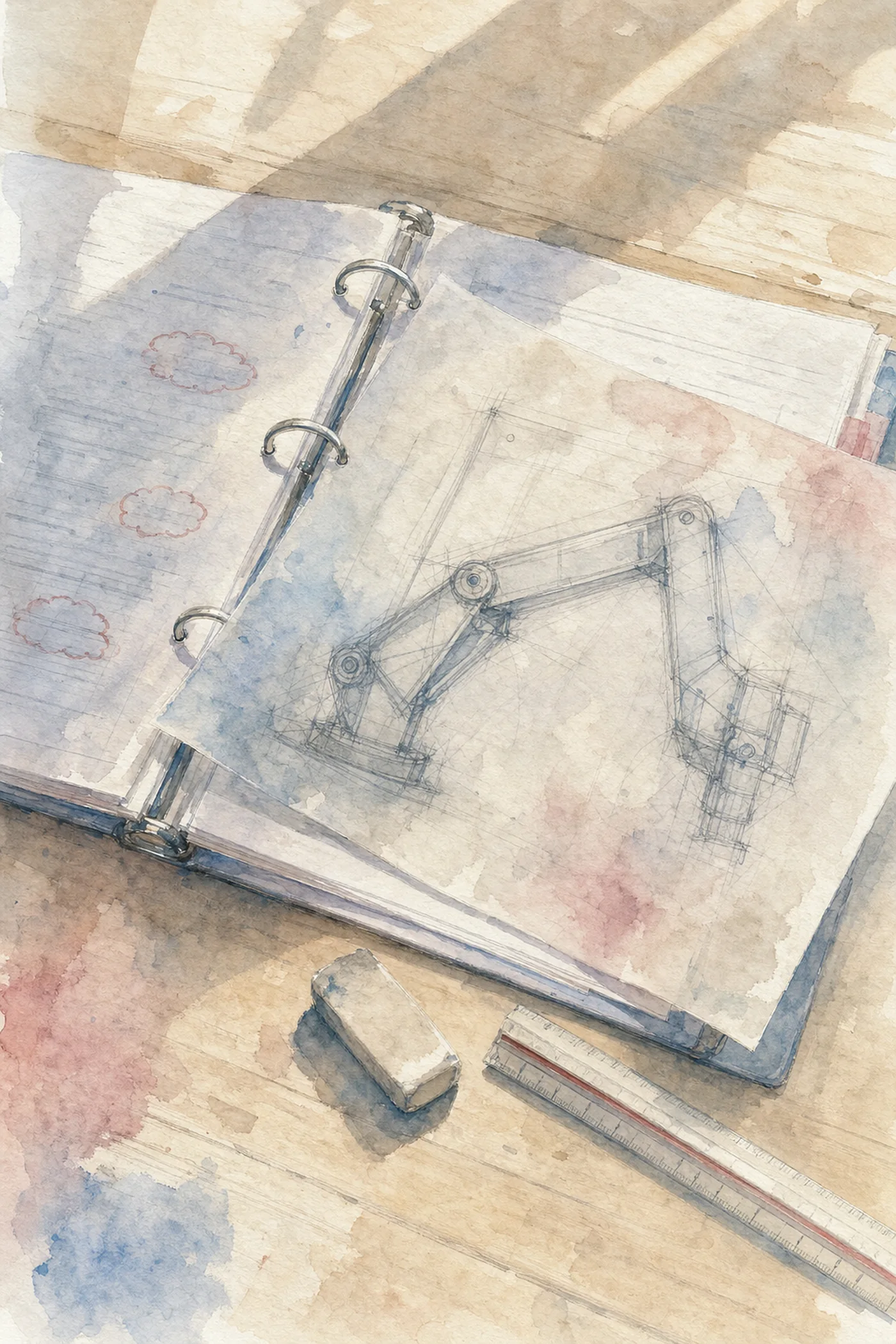
- Design concept: sketches that capture the crux of the design.
- Sequence of operations: how the design runs, step by step, from show start to reset.
- Engineering approaches: the mechanisms, controls and systems that can deliver it, and the trade-offs between them.
- System integration: how it fits the show, the building and the systems around it.
- Facility impacts: the power, structure, space, rigging and access the design asks of the building.
- Maintenance access and requirements: how the design will be maintained, the access it needs, and what the park's maintenance requirements ask of it.
- Applied specifications and requirements: every requirement in the owner's or park's specifications that applies, and how it shapes the design.
- Complexity and engineering risk: what's off the shelf, what's been done before, and what's never been done.
- Design review load: the analysis, testing and documentation each review will ask for.
- Outliers that drive cost and schedule: long-lead items, prototypes and testing.
How afeasibility study works.
We start by sitting down with your creative and technical team to understand your goals. From there we build the feasibility package that every later decision grows from.
Themed entertainment engineerswith years at Universal, Imagineering and Netflix.
Our team has spent years inside Universal, Walt Disney Imagineering and Netflix, taking never-been-done-before ideas from pencil sketch to opening day.